
The Shortage Is Accelerating, Not Stabilizing
In 2021, a Deloitte and Manufacturing Institute study projected 2.1 million manufacturing jobs unfilled by 2030, at a potential cost of $1 trillion in that year alone. By their 2024 update, the number had jumped to 3.8 million new workers needed by 2033. Nearly half of those positions are at risk of going unfilled.
This article covers what’s changed since 2024, what strategies are producing results, and where packaging automation fits into a realistic plan for manufacturers who need answers now.
Tariffs and Reshoring: More Demand, Same Workforce
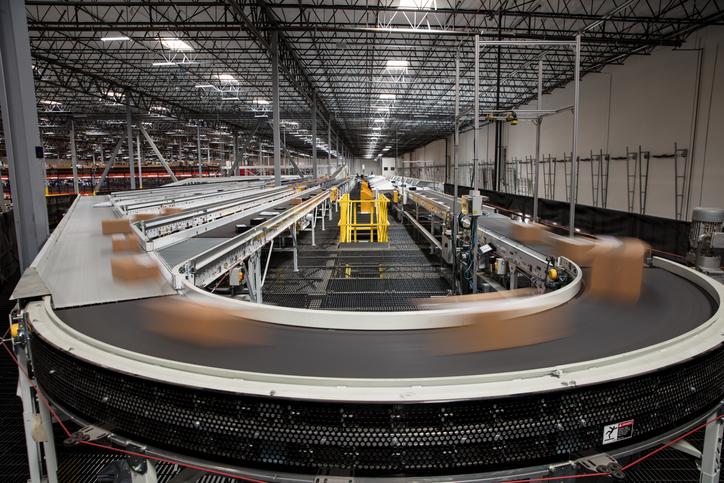
Higher tariffs on imported goods are pushing companies to bring production back to domestic soil. In 2024 alone, 244,000 U.S. manufacturing jobs were announced through reshoring and foreign direct investment. In early 2025, tariffs were cited as a reshoring motivator 454% more often than the year prior.
On paper, reshoring is a win for American manufacturing. On the production floor, it means a surge of new facilities, new packaging lines, and new positions all chasing the same limited talent pool. Every manufacturer bringing production stateside is competing for workers who don’t exist in sufficient numbers.
Layer in tariff-burdened raw materials and the squeeze comes from both directions: labor costs climbing, material costs climbing, and margins shrinking. Investing in packaging automation is becoming less of a strategic choice and more of a financial requirement just to make production pencil out.
Two Shortages, Not One
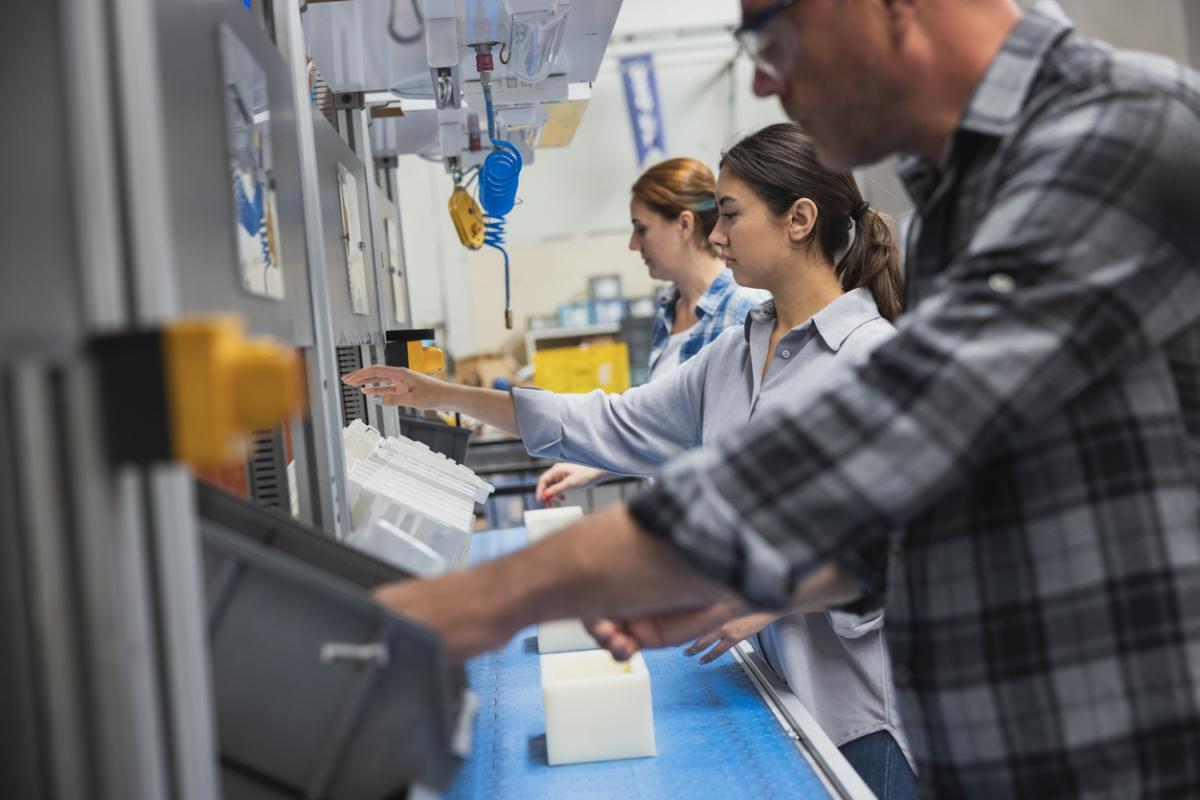
Most conversations about the labor shortage in manufacturing treat it as a single problem. In practice, manufacturers are fighting two different shortages driven by different forces.
The Commodity Labor Gap
Commodity labor keeps production floors running. These are lower-wage, physically demanding, repetitive roles where a single no-show can stop an entire packaging line.
We’ve seen this with our own customers. One food packaging operation hired five operators on a Monday. Two left after lunch. One more didn’t return the next morning. By Tuesday, one worker remained from a full day’s recruiting effort.
Tighter immigration policies have reduced the available labor pool for certain roles. As that workforce shrinks, staffing gaps have grown. Manufacturers are not only competing with one another for qualified workers, but also with warehouses, delivery services, and other employers offering similar pay for less physically demanding jobs.
The Manufacturing Skills Gap
On the other end, demand for technical specialists who program, maintain, and optimize automated packaging equipment has outpaced supply. Production roles have dropped from 51.9% to 48.7% of total manufacturing employment since 2003, while technical and computing roles have grown. Factories need fewer hands on the line and more people behind the controls who can troubleshoot a servo drive, calibrate a case erector, or read a PLC fault code.
In 2026, a college degree is no longer the gatekeeper for these roles. Certifications, demonstrable skills, and hands-on knowledge are what count. Can you run a PLC? Can you diagnose why a palletizer is faulting mid-cycle? That matters more than a diploma.
The talent pool for skilled manufacturing workers is tight, but companies investing in upskilling and certification programs are building the workforce they need rather than waiting for it to appear.
The Pacific Northwest: National Problems on a Higher Cost Base
Washington state’s 2026 minimum wage of $17.13 per hour is the highest statewide rate in the country. Every employer in the region competes for the same workers, across every industry. Your production floor competes not just with the manufacturer down the road, but with remote-friendly tech companies that let people work from home.
Pacific Northwest manufacturers face the same reshoring demand and manufacturing skills gap as the rest of the country, layered on top of a cost-of-living environment that makes traditional wage packages feel inadequate. The companies holding ground here are rethinking compensation beyond base pay, compressing training timelines with digital tools, investing in packaging line automation to reduce dependence on hard-to-fill roles, and expanding the labor pool through flexible scheduling.
The Real Cost of Manufacturing Turnover
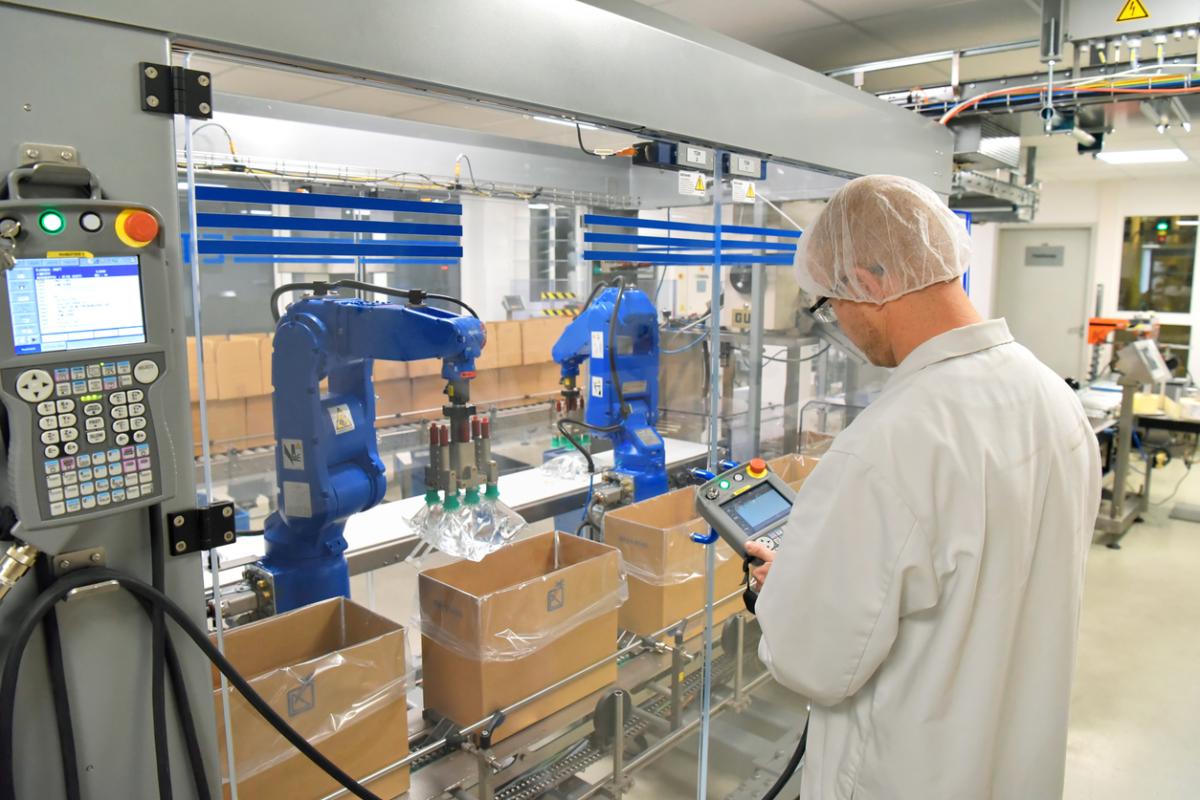
Replacing a single skilled frontline worker costs between $10,000 and $40,000 when you add up recruiting, onboarding, certification, and lost productivity during ramp-up. Lose three operators in a quarter, and you’ve burned through $30,000 to $120,000 with nothing lasting to show for it.
Manufacturing turnover compounds because each departure pulls experienced workers off the line to train replacements who may not last the week. Production gaps, recruiter fatigue, morale erosion among your reliable workers who watch the revolving door: these costs accumulate even when they don’t appear on a balance sheet.
65% of manufacturers surveyed by Deloitte and The Manufacturing Institute identified attracting and retaining talent as their primary business challenge. Keeping a trained worker costs less than replacing one. The positions that churn hardest are the ones most suited to automation.
Three Strategies That Are Producing Results
The playbook for responding to the manufacturing labor shortage has changed since 2024. Three approaches that barely existed at scale a few years ago are now working.
Lifestyle Spending Accounts
Wages alone aren’t winning the talent competition. Lifestyle Spending Accounts (LSAs) are flexible, employer-funded stipends that workers apply toward what actually matters in their daily lives: fuel cards that offset a $60 daily commute, childcare assistance, education and certification costs, tool allowances, and wellness benefits.
93% employee participation and 89% fund utilization among workers with access to LSAs, at a typical employer cost of about $1,200 per employee per year. Compare that to the $10,000-plus cost of a single turnover event.
The shift is from competing on dollars alone to competing on quality of life. That difference is often what pulls a qualified candidate toward your offer instead of the one across town.
Digital Training That Compresses Onboarding
Simulation-based training platforms let new operators learn automated packaging equipment in a virtual environment, running machines, diagnosing faults, and building confidence before they ever step onto your production floor. Research shows this approach can shorten manufacturing learning cycles by up to 60%.
New hires reach productive output faster. Training errors happen in simulation, not on your actual equipment. And you can evaluate whether someone has the aptitude for the role before committing weeks of on-the-job mentoring. For operations running complex packaging automation (case erectors, palletizers, automatic stretch wrapping machines, integrated automated packaging lines), digital training is one of the fastest ways to close the manufacturing skills gap.
Flexible Shift Models
Manufacturing is borrowing from the gig economy. Fractional or flexible shift models let you bring in floor workers through mobile apps. Workers opt into available shifts the way a rideshare driver picks up rides.
Platforms like Veryable connect manufacturers with on-demand labor for daily or project-based assignments, using a merit-based rating system that scores workers on performance and reliability. Demand spikes get covered without overtime or panic hiring. Workers who want flexibility over a fixed 6-to-2 schedule now consider manufacturing. Your fixed labor costs drop while production capacity holds steady.
This approach won’t replace your core crew. But flexible manufacturing staffing platforms are expanding the available labor pool to people who would never have applied for a traditional factory schedule, and they’re growing fast.
How Packaging Automation Breaks the Cycle
As of August 2025, approximately 409,000 manufacturing positions remained unfilled, and the sector employs 12.7 million people, down from 17.2 million in 2000. The supply-demand imbalance from 2024 hasn’t just continued. It’s been compressed by tariffs and reshoring, and the cycle keeps tightening.
Fewer workers and more open positions push wages up. Tariff-burdened materials push raw material costs up alongside labor. Higher production costs raise your prices. Higher prices reduce competitiveness. Thinner margins leave less capital for workforce development, equipment upgrades, or facility improvements. Without that investment, efficiency stagnates and the cycle repeats.
The manufacturers breaking this cycle invest in packaging automation to produce more output per labor dollar and reduce their exposure to both workforce instability and material cost swings. When you run an automated packaging line with three skilled operators instead of eight manual workers, producing more consistent output at higher speed, you create the margin to reinvest in equipment, training, and compensation for the people who stay.
Automated packaging equipment addresses the structural labor shortage at four levels:
- Continuous operation. Case erectors, automatic stretch wrapping machines, palletizers, and labeling systems run regardless of who showed up this morning. Your packaging line stops depending on whether you filled every open position this week.
- Output without added headcount. Automated packaging lines maintain steady throughput across every shift. Manual labor can’t sustain the same consistency over ten-hour days.
- Predictable quality. Precision and consistency every cycle, every shift. Fewer defects, less rework, and fewer customer complaints.
- The math. In 2024, packaging automation was a cost-saving opportunity. In 2026, with tariffed materials, tighter labor, and compressed margins, it’s the calculation that determines whether your production is profitable.
A candid note: automation requires real capital and real planning. Complex packaging line automation projects can take several months from design to full production. But the all-in cost of automation, spread across its useful life, is predictable in a way that labor costs simply are not. That predictability is worth a lot when three no-shows on a Monday morning can shut down a line.
Where This Leaves You

The manufacturing labor shortage that defined 2024 has deepened through 2026. Reshoring pressures, tariff-driven cost increases, a widening manufacturing skills gap, and a generational shift away from manufacturing careers have created conditions where the cost of waiting keeps rising.
The tools for responding have improved too. LSAs (Lifestyle Spending Accounts) are making compensation packages genuinely competitive. Digital training is cutting months off onboarding timelines. Flexible shift models are bringing in workers who wouldn’t have considered manufacturing before. And packaging automation remains the most reliable path to stable, efficient, profitable production regardless of what the labor market does next.
The manufacturers who are pulling ahead aren’t waiting for the workforce to fix itself. They’re investing in automated packaging equipment, training, and workforce strategy that make their operations less dependent on a labor market they can’t control.
If you’re evaluating how packaging line automation can stabilize your production and protect your margins, talk to a Summit Packaging specialist. No pressure, just a conversation about what’s possible for your operation.
Sources
- Deloitte and The Manufacturing Institute, “2.1 Million Manufacturing Jobs Could Go Unfilled by 2030” (May 2021)
- Deloitte and The Manufacturing Institute, “Taking Charge: Manufacturers Need as Many as 3.8 Million New Employees by 2033” (April 2024)
- Deloitte, “A Shrinking Workforce May Thwart US Manufacturing Ambitions” (2025)
- Deloitte and The Manufacturing Institute, “Manufacturing Skills Gap Study”
- Reshoring Initiative, “2024 Annual Report Including 1Q2025 Insights” (June 2025)
- Washington State Department of Labor and Industries, “2026 Minimum Wage Announcement”
- Compt, “39 Surprising Statistics About Lifestyle Spending Accounts” (2025)
- ATS Industrial Automation, “Virtual Reality in Manufacturing: How to Solve Training Gaps with Immersive Tech”